Keep production running

Introduce micro-segmentation without IP-addressing or plant-wide VLAN redesign.


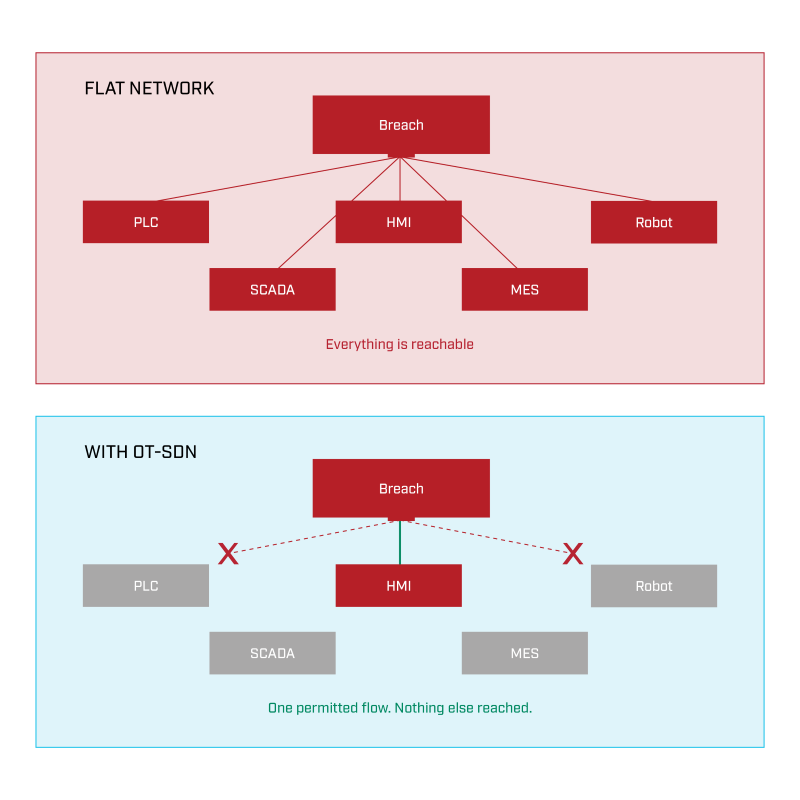
Contain lateral movement

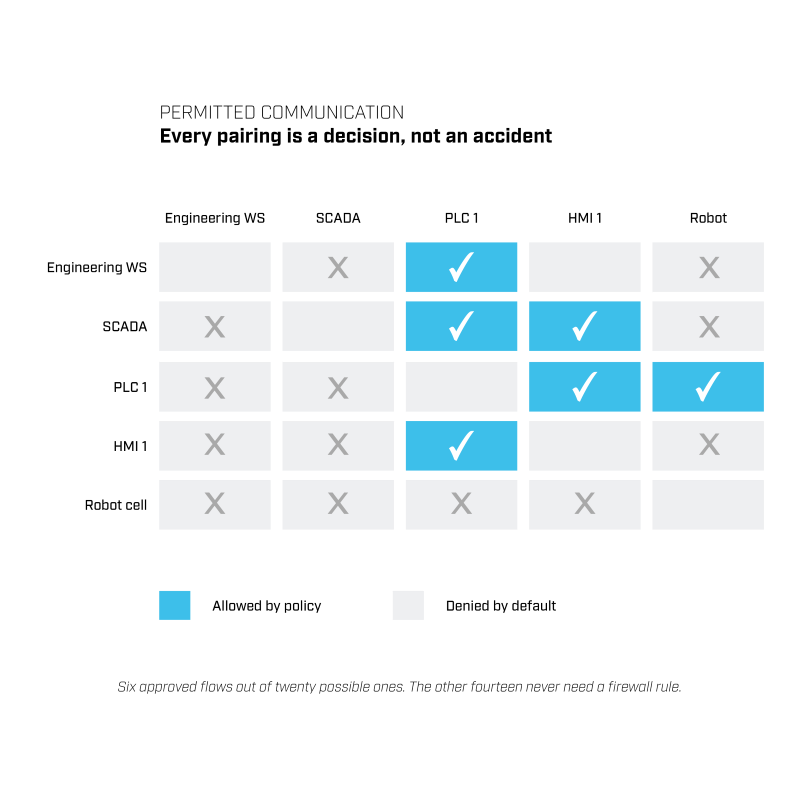
Only explicitly approved communication is forwarded. Everything else is denied by default.


See and approve what is allowed

View your live topology, permitted flows, and where each policy is enforced.

THE PROBLEM

Industrial networks were built to run, not to be segmented

Your network was built for availability. Its trust model wasn’t.

Flat and semi-flat industrial networks make communication easy—but they also give compromised or misconfigured devices room to move. Conventional segmentation projects often mean VLAN redesign, re-addressing, switch-by-switch configuration, downtime, and ongoing rule maintenance.

The result is familiar: segmentation is postponed while security teams are still expected to demonstrate control over communication between critical assets.
Deny-by-default
THE SOLUTION

One policy. Enforced wherever traffic enters the network

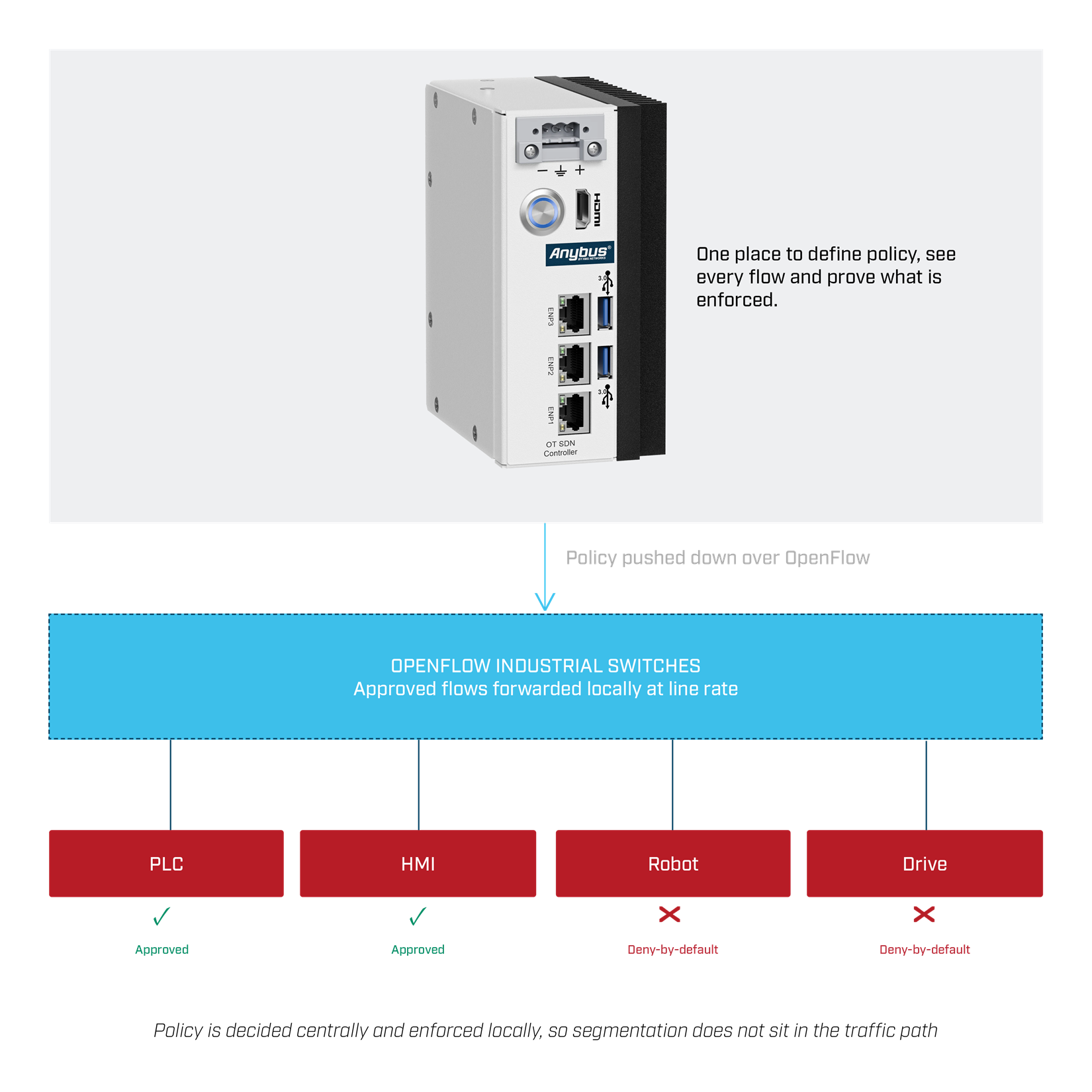
Anybus Defender OT-SDN centralizes communication policy while OpenFlow-enabled industrial switches continue forwarding and enforcing traffic locally.

Define which devices may communicate, using which protocols and paths. Approved flows are distributed automatically to the switches. Unknown devices and unapproved traffic remain blocked by default.

The controller gives you one place to design, review, change, and document policy. Because enforcement remains in the switches, production traffic does not need to pass through the controller.

(Built on OpenFlow, an open standard maintained under the Linux Foundation, so the same controller works across compatible switch vendors.)
  1. See the network: Discover connected assets and maintain a current topology.
  2. Define intended communication: Approve only the device-to-device flows your operation requires.
  3. Enforce locally: Distribute policy to the industrial switches for line-rate enforcement.
  4. Detect the unexpected: Identify unknown devices, rejected flows, and changes that require attention.
USE CASES

Where OT-SDN earns its place

Use case 01
USE CASE 01

Segment machines and cells

The situation
Production cells, machine modules and critical devices share a network that treats them all as equally trusted. Separating them properly means VLANs on every switch, and every change risks the line.

What you can do
Define the communication that operation actually requires, device by device, in the controller. The switches enforce it. What you end up with is a documented matrix of approved flows rather than a set of rules spread across the plant.

The outcome

  • Least privilege in practice. Devices reach only what they need, not everything on the subnet.
  • One place to change it. Policy is edited centrally, not switch by switch.
  • Evidence for the auditor. What is allowed, why, and where it is enforced.
Use case 02
USE CASE 02

Contain incidents before they spread

The situation
On a flat network, one compromised device, one misconfigured laptop or one infected USB reaches everything. Containment depends on noticing quickly, which is exactly what poor east-west visibility prevents.

What you can do
With deny-by-default enforcement, a device can only ever reach the endpoints its policy permits. Traffic outside that set is dropped at the switch, and the controller flags the attempt rather than silently passing it.

The outcome

  • A smaller blast radius. An incident is bounded by policy rather than by luck.
  • Faster detection. Unknown traffic is an alert, not background noise.
  • Uptime protected. One affected cell does not become a plant-wide stoppage.
Use case 03
USE CASE 03

Improve a brownfield network in stages

The situation
The network you have took years to grow and cannot be replaced in a weekend. Any approach that begins with ripping out switches will not get approved, however good the security argument.

What you can do
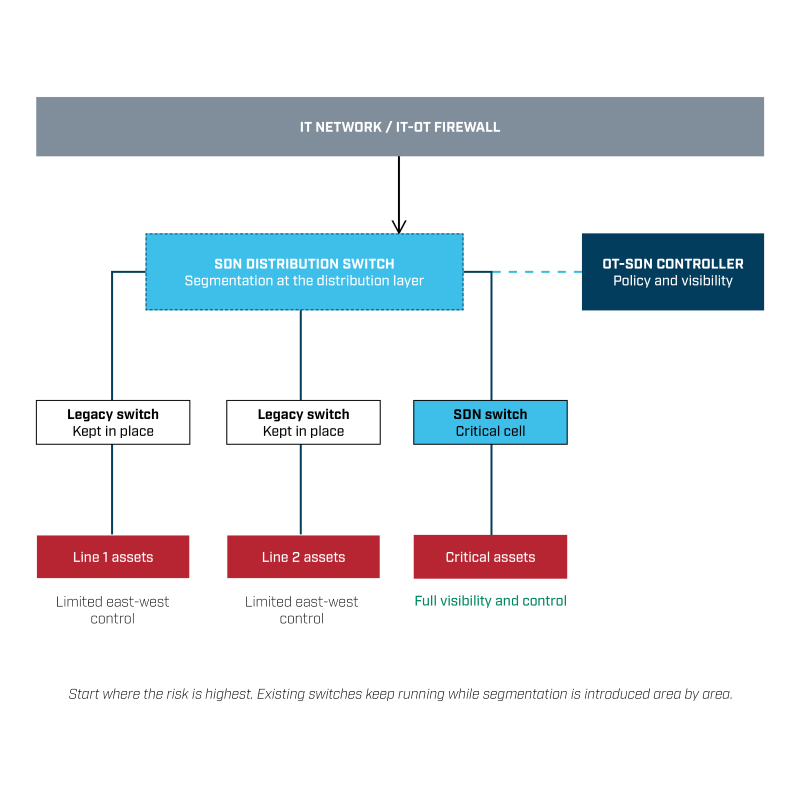
Deploy OT-SDN alongside what is already there. Put segmentation at the distribution layer, add SDN switches where the risk is highest, and leave legacy switches running until they are due for replacement anyway.

The outcome

  • Start small. Protect the critical cell first and prove the model before expanding.
  • No re-addressing project. Existing IP plans stay as they are.
  • A path, not a cliff. Coverage grows with each refresh cycle rather than in one leap.
PRODUCT CATEGORIES

What OT-SDN is made of

A working deployment needs a controller and at least one OpenFlow switch. Because the controller talks OpenFlow rather than a proprietary protocol, the switch estate can grow with compatible hardware from more than one manufacturer.
ot-sdn-controller
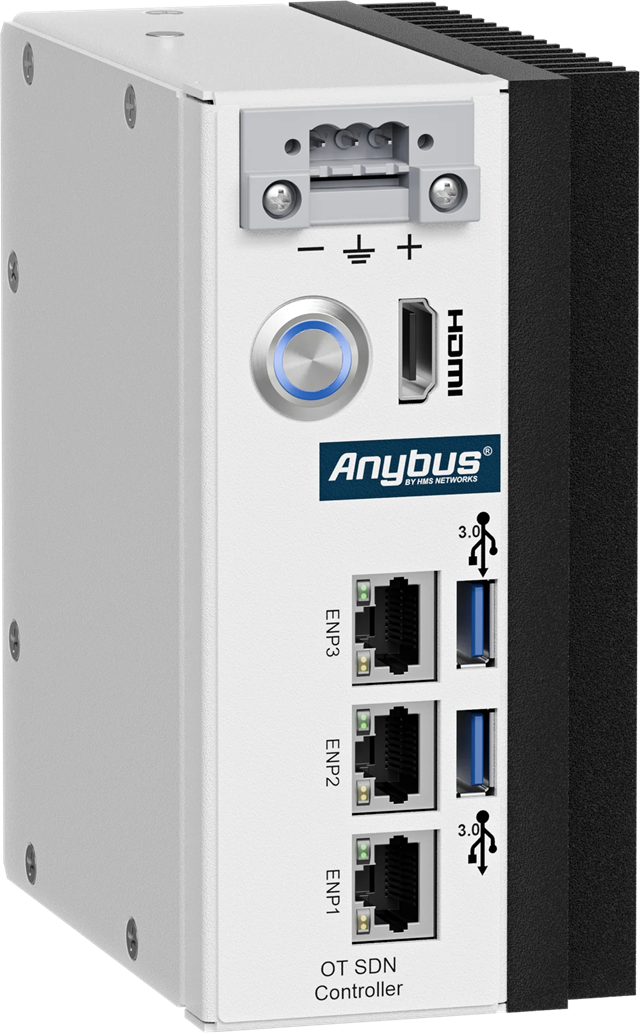
OT SDN Controller

Holds the security policy for the whole network, maps the topology automatically and pushes approved flows down to the switches. This is where segmentation is designed, reviewed and evidenced.

ot-sdn-switch-16port
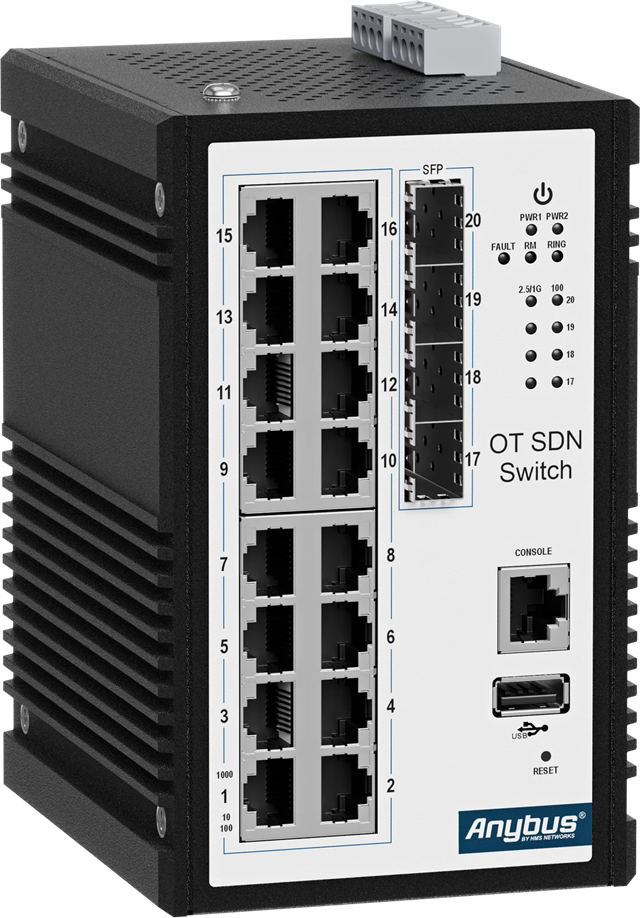
OT SDN Switch, 16-port

The distribution-layer switch. Enforces policy locally at line rate and carries the traffic between cells, lines and the wider OT network.

ot-sdn-switch-8port
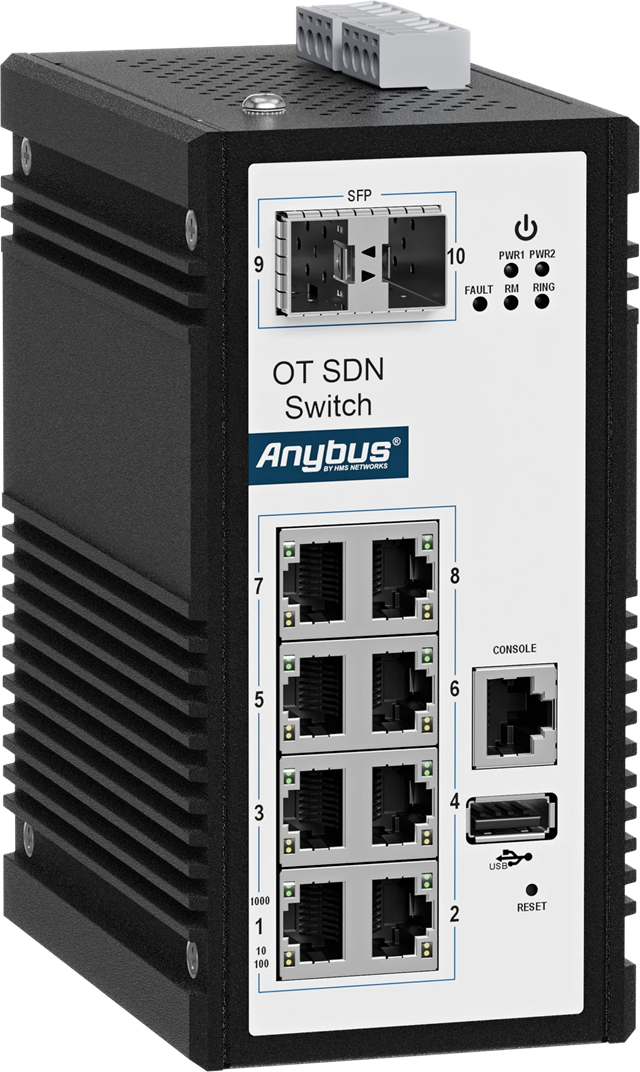
OT SDN Switch, 8-port

The cell-level switch. Sized for a machine, a module or a critical asset group where segmentation needs to reach right down to the device.

THE DIFFERENCE

What changes on the network

Traditional OT network

  • Flat or semi-flat architecture
  • Implicit trust between devices
  • Limited east-west visibility
  • Complex VLAN and firewall operations
  • High lateral movement risk

With OT-SDN

  • Segmentation designed in, not bolted on
  • Deny-by-default policy enforcement
  • Live view of devices, flows and policies
  • Central policy instead of per-switch rules
  • Contained blast radius
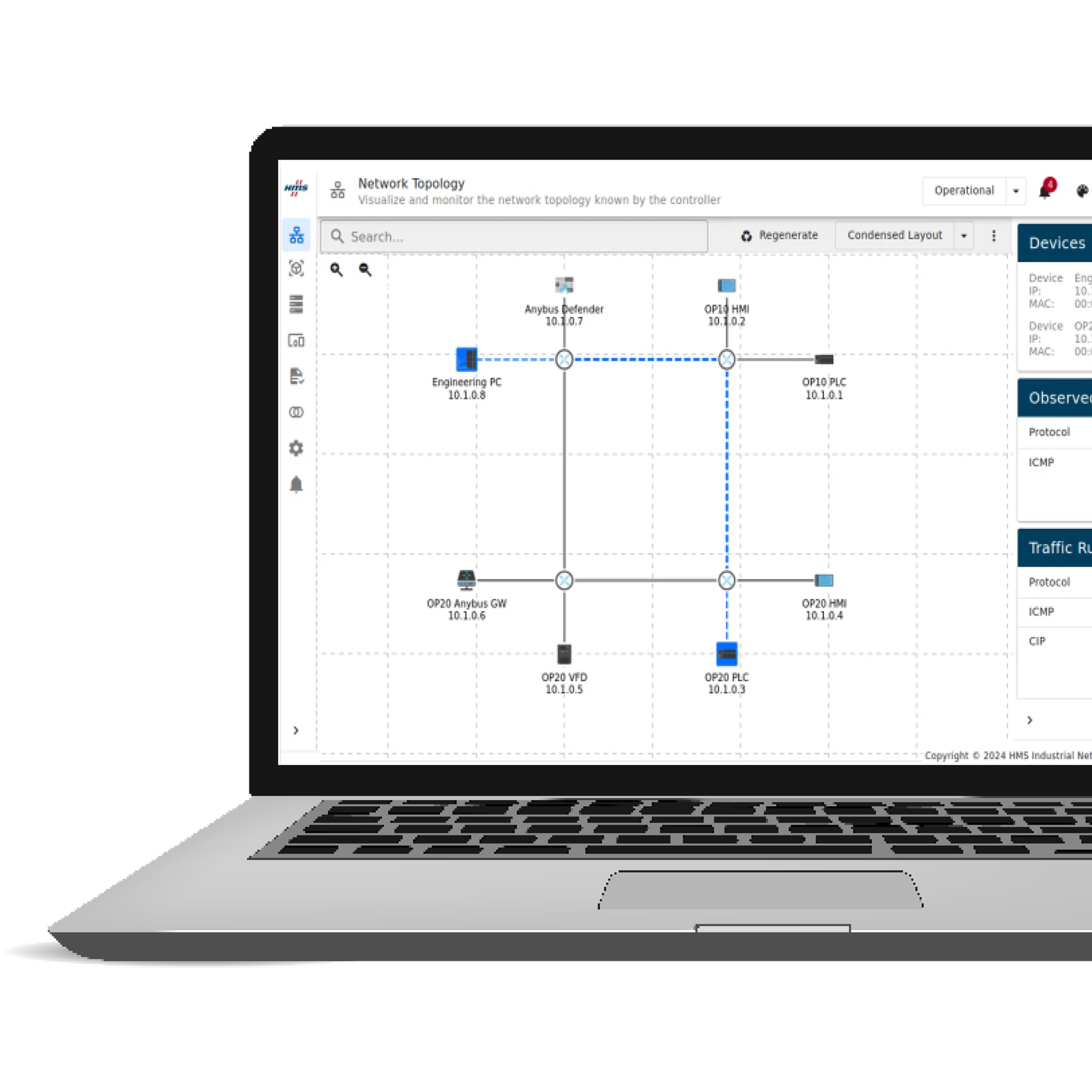
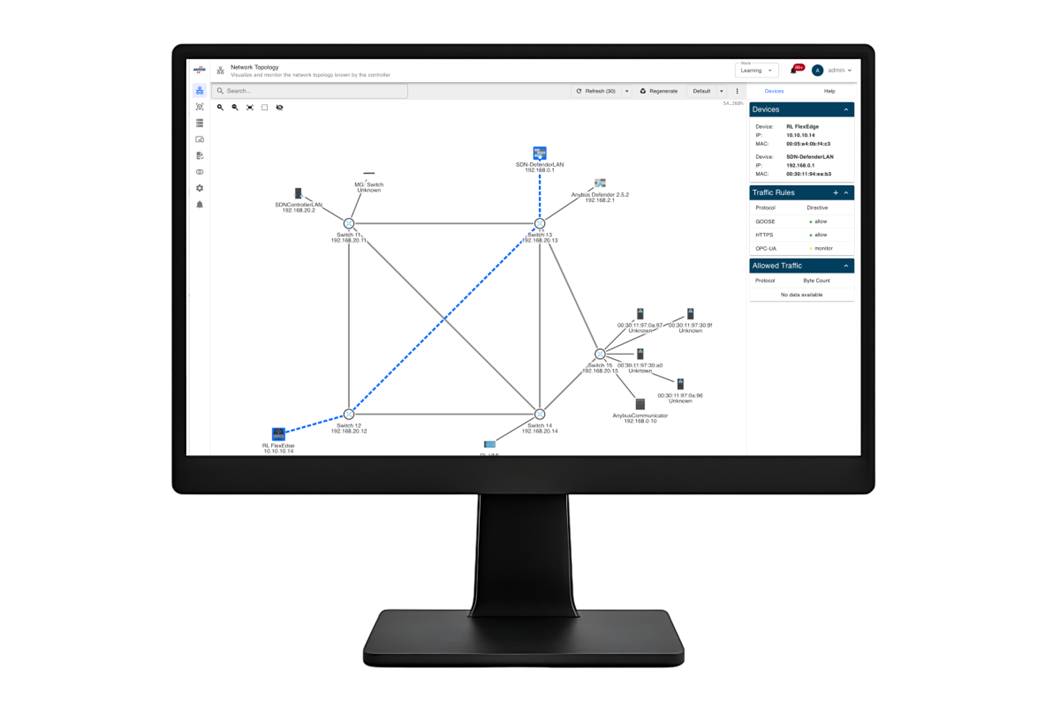
OT-SDN Controller Topology
THE CONTROLLER

See the network you actually have

The controller maps the network automatically and keeps it current, so the topology on screen is the plant as it is, rather than as the last drawing described it. Take for example, when any two devices have been selected, you see the traffic rules between them alongside the traffic that has genuinely been observed on that link.

What happens when a new device is added or replace?

1. Device connects: A PLC, HMI, robot or workstation is detected by the SDN switch.

2. Controller validates: The controller identifies the device and checks it against the intended policy.

3. Approved flow installed: Permitted communication is pushed down to the switches.

4. Everything else blocked: Unknown devices and unapproved traffic are denied by default.

STANDARDS AND REGULATIONS

From implicit trust to documented communication

OT-SDN helps industrial organisations move from flat networks with implicit trust to controlled, documented communication paths.

IEC 62443 zones and conduits

Define what belongs together, then enforce approved conduits between assets and zones. The controller holds that definition in one place, which is also where the evidence comes from.

Deny-by-default communication

Only the flows needed for operation, maintenance and monitoring are permitted. Least privilege stops being an aspiration and becomes the network's resting state.

NIS2 and risk-based protection

Segmentation, access control and resilient network design support the risk management measures required under Article 21 for organisations in scope in the EU.

FREQUENTLY ASKED QUESTIONS

Common questions

OT-SDN is software-defined networking applied to operational technology. A central controller holds the communication policy for the network, and OpenFlow-capable industrial switches enforce it locally. Instead of configuring segmentation switch by switch, you define once which devices may communicate, and anything not approved is denied by default.
VLANs separate broadcast domains; they do not describe which device may talk to which. Segmenting properly with VLANs means changes on every switch, often re-addressing, and rules that drift apart over time. OT-SDN keeps the policy in one place, expresses it as device-to-device flows, and blocks everything else without a per-switch rule set to maintain.
No. OT-SDN can be deployed alongside an existing network, with segmentation at the distribution layer and SDN switches added where the risk is highest. Legacy switches keep running, and coverage extends as equipment is replaced on its normal cycle.
No. It uses OpenFlow, an open standard originally developed at Stanford and now maintained by the Open Networking Foundation under the Linux Foundation. The same controller works with compatible switches from more than one manufacturer.
It provides the enforced conduits between defined zones that the IEC 62443 model calls for, and produces documentation of what is permitted and where. For organisations in scope in the EU, that supports the risk management measures required under Article 21 of NIS2. Conformity in either case depends on the complete system and how it is operated.

Talk to an expert

The fastest way to understand OT-SDN is to watch a policy being written and enforced. Tell us roughly what your network looks like and we will walk you through it.