EU-Cyber-Resilience-Act-for-connected-devices

What CRA means for your connected devices


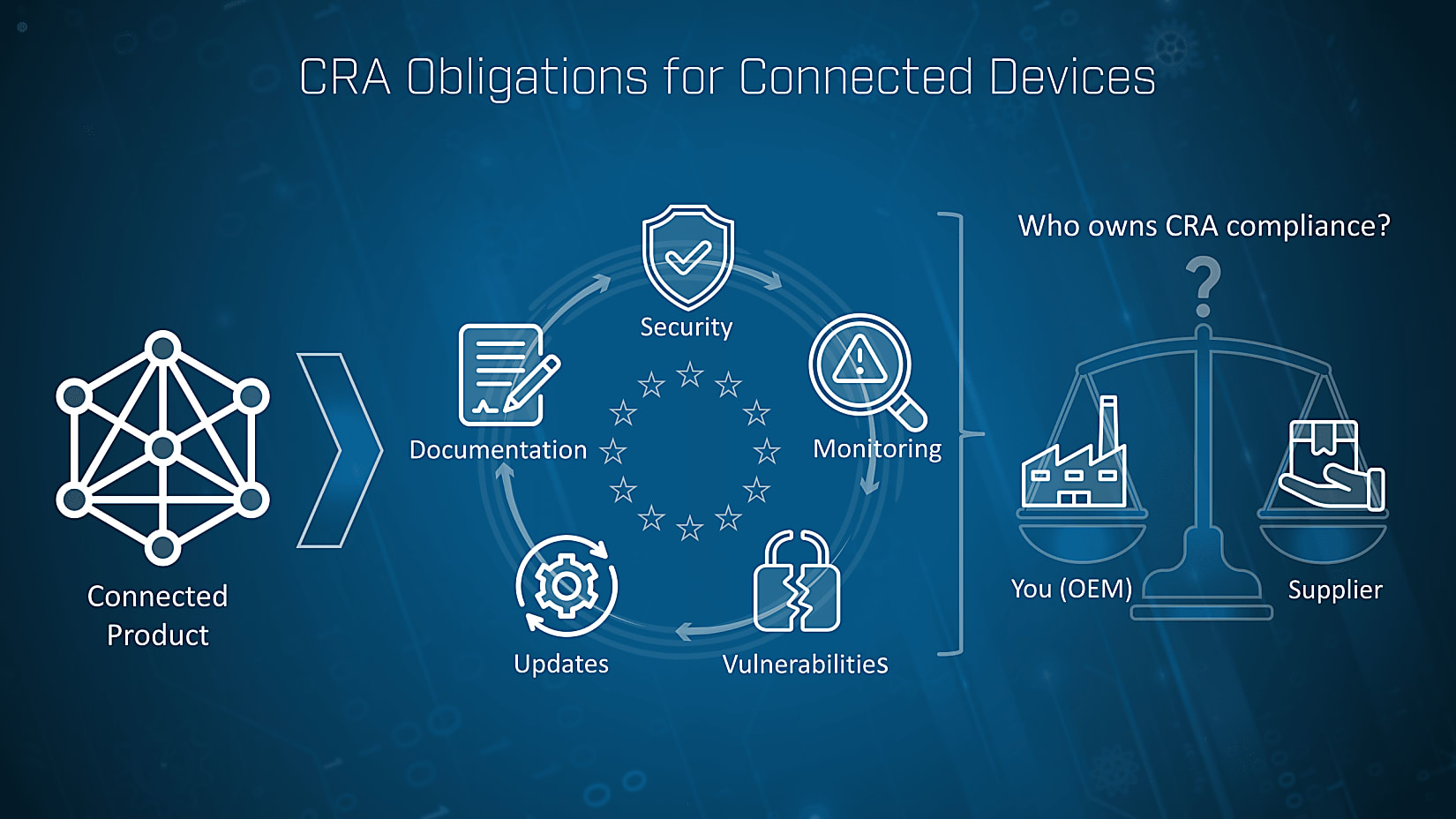
The EU Cyber Resilience Act will force you to think differently about connectivity. It’s no longer just about making a device talk to a network - it now includes long-term responsibilities for security, updates, documentation, and lifecycle obligations for all digital products sold in the EU, no matter where they’re manufactured.

EU-Cyber-Resilience-Act-increases-workload-for-manufacturers

The workload is about to increase - are you ready?

The Cyber Resilience Act is already in force, and the 2027 deadline is approaching fast. If you rely on legacy or in-house connectivity solutions, meeting these requirements can quickly become complex.

What used to be just connectivity is now becoming a growing compliance burden - driving internal workload, risk, and lifecycle costs.
CRA-Checklist_image

Check your CRA readiness

This checklist helps you assess how prepared your product is for the EU Cyber Resilience Act. It focuses on connectivity and other areas where CRA most often creates long‑term workload, risk, and lifecycle responsibility. Complete the checklist now to spot any potential gaps. 

Book a personal consultation

Struggling to make your communication solution CRA-compliant? Need guidance on a specific project or unsure how to meet all CRA requirements? Schedule a personal consultation with one of our experts today - we’ll help you tackle CRA compliance with confidence!

Key resources for CRA readiness

CRA-Campaign_Shield-stars-ring

On-Demand CRA Webinar

Download our practical, engineering-focused webinar hosted by cybersecurity expert Jens Jakobsen to learn what the Cyber Resilience Act (CRA) really requires - and what it means for your products, your organization, and your long-term responsibilities.

Explore practical resources to prepare for CRA

CRA is redefining connectivity for manufacturers

This blog post explains what that responsibility looks like in practice and answers a question many device makers and machine builders now ask: what does the CRA actually mean for manufacturers who build their own connectivity?

CRA is painful, but necessary

This blog post explains why the Cyber Resilience Act ultimately benefits industrial device makers and machine builders. Rather than focusing on what the CRA is, it answers a broader question: why is the CRA being introduced at all, and why is it necessary despite the disruption it creates?

Replacing legacy connectivity solutions

This blog post moves from why to how. It explains why legacy connectivity is difficult to make CRA-compliant, and how achieving CRA compliance becomes much easier for manufacturers if they replace older connectivity with a modern, CRA ready connectivity solution.

CRA makes connectivity a strategic decision

This blog post explains why CRA disrupts traditional ways of working, where friction often appears inside organizations, what forward thinking teams are beginning to change, and why it may be time to rethink how connectivity is handled.

FAQ

Questions and answers


The Cyber Resilience Act is an EU regulation introducing cybersecurity requirements for products with digital elements.


It requires manufacturers to ensure that products are secure by design and that vulnerabilities are monitored and addressed throughout the product lifecycle.


For device makers and machine builders, this may include connectivity components such as gateways, protocol converters, or communication modules used in machines.

Connectivity devices enable communication between devices or machines and industrial networks.
Because they process and transmit data, they may be classified as products with digital elements under CRA.


This means they may require:

  • Built-in security functionality
  • Vulnerability monitoring
  • Security updates
  • Compliance documentation


For device manufacturers with in-house gateways or communication modules, this can introduce new long-term responsibilities.

The Cyber Resilience Act (CRA) affects any company that develops, manufactures, or sells products with digital elements in the EU. This includes device makers and machine builders, whose products contain software, firmware, or connectivity.

The regulation has already entered into force, and manufacturers are expected to start preparing their products and processes now.


Security requirements, vulnerability management processes, and documentation must be established before the regulation fully applies.


Because redesigning connectivity solutions can take significant time, many manufacturers are already evaluating whether their current connectivity strategy will meet the upcoming requirements.

Industrial gateways such as the Anybus Communicator are designed specifically for industrial connectivity and security requirements.


They can help by:


  • Providing connectivity to major industrial networks
  • Supporting modern security requirements

  • Offloading vulnerability management and security updates

  • Reducing the need to redesign in-house connectivity devices


This allows device makers and machine builders to modernize connectivity without a long redesign project.

When connectivity needs to be built directly into a device, the easiest way to prepare for CRA requirements is to integrate a ready-made communication interface instead of developing connectivity in-house.

Embedded solutions such as Anybus CompactCom enable secure, maintainable, and network-ready connectivity directly inside your device.

They can help by:

  • Providing connectivity to major industrial networks
  • Supporting modern security requirements
  • Offloading protocol stack management, security updates, and certifications
  • Reducing the need for in-house development

    This allows device makers and machine builders to build compliant products from the start, without increasing development complexity or long-term maintenance efforts.