Smart water initiatives promise to revolutionize how utilities manage their infrastructure, yet many projects struggle to deliver on their potential. A survey conducted by HMS Networks in November 2024 among water and wastewater companies revealed a critical insight: integration difficulties with existing systems and infrastructure represent the primary barrier to successfully launching and operating smart water projects.
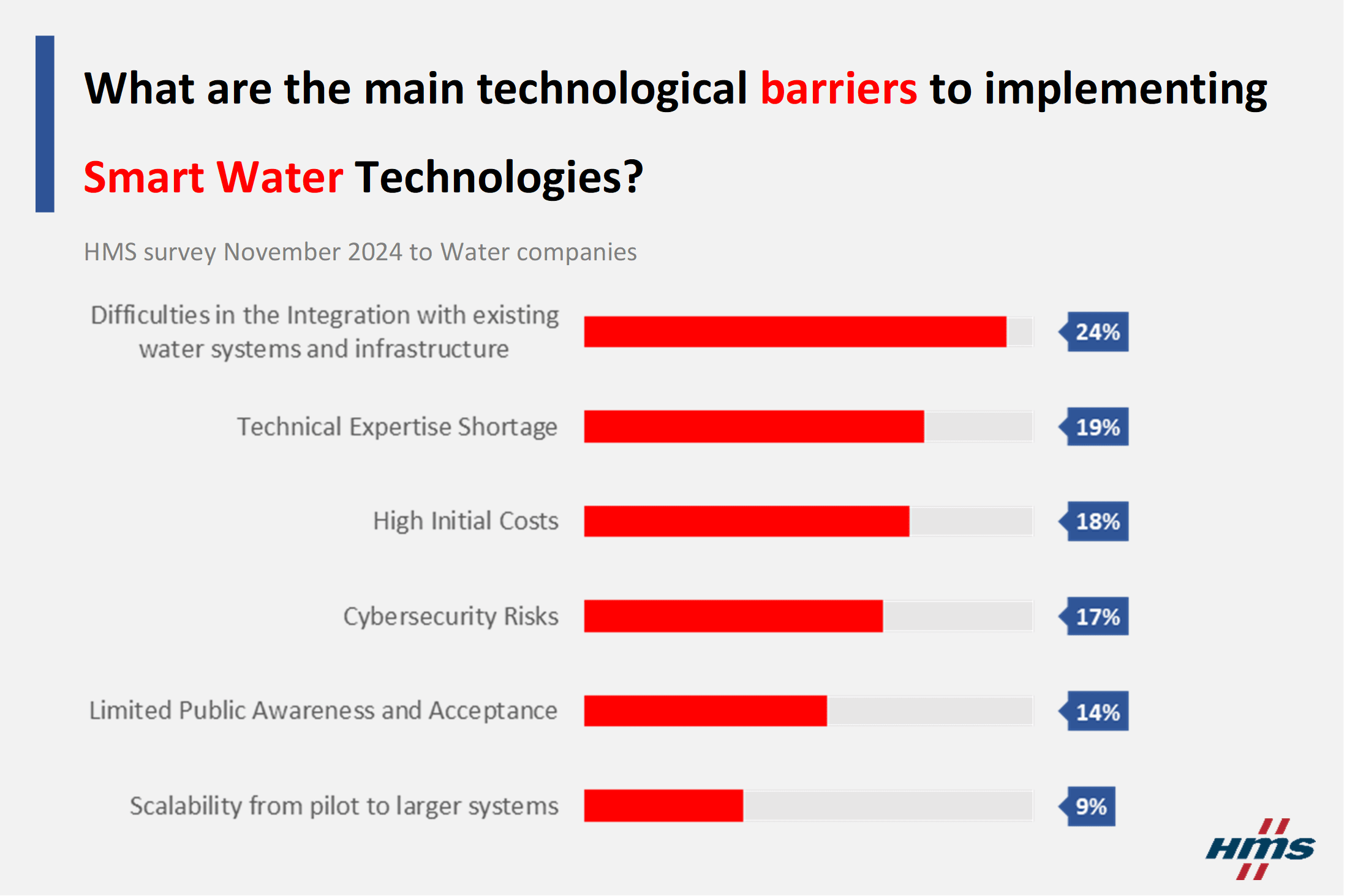
This finding highlights a fundamental challenge facing the water industry. While the benefits of smart water technologies are well-documented—from improved efficiency to predictive maintenance capabilities—the path to implementation remains complex. The root of this complexity lies in industrial connectivity, a prerequisite that the DVGW's Water Supply 4.0 maturity model identifies as essential for companies pursuing digital transformation.
Understanding these integration challenges and their solutions is crucial for water utilities seeking to modernize their operations while maximizing their existing infrastructure investments.
The challenges of integrating smart water projects arise from a web of interconnected factors that pose significant obstacles to successful implementation. These issues are especially critical in the water industry, where maintaining operational continuity is essential, and system failures can have serious and immediate public health consequences.
Water and wastewater utilities frequently operate with isolated data systems that cannot effectively communicate with each other. This fragmentation occurs when different departments or processes use incompatible technologies, creating data silos that prevent comprehensive system visibility. The result is a patchwork of information sources that cannot be easily integrated into cohesive smart water solutions.
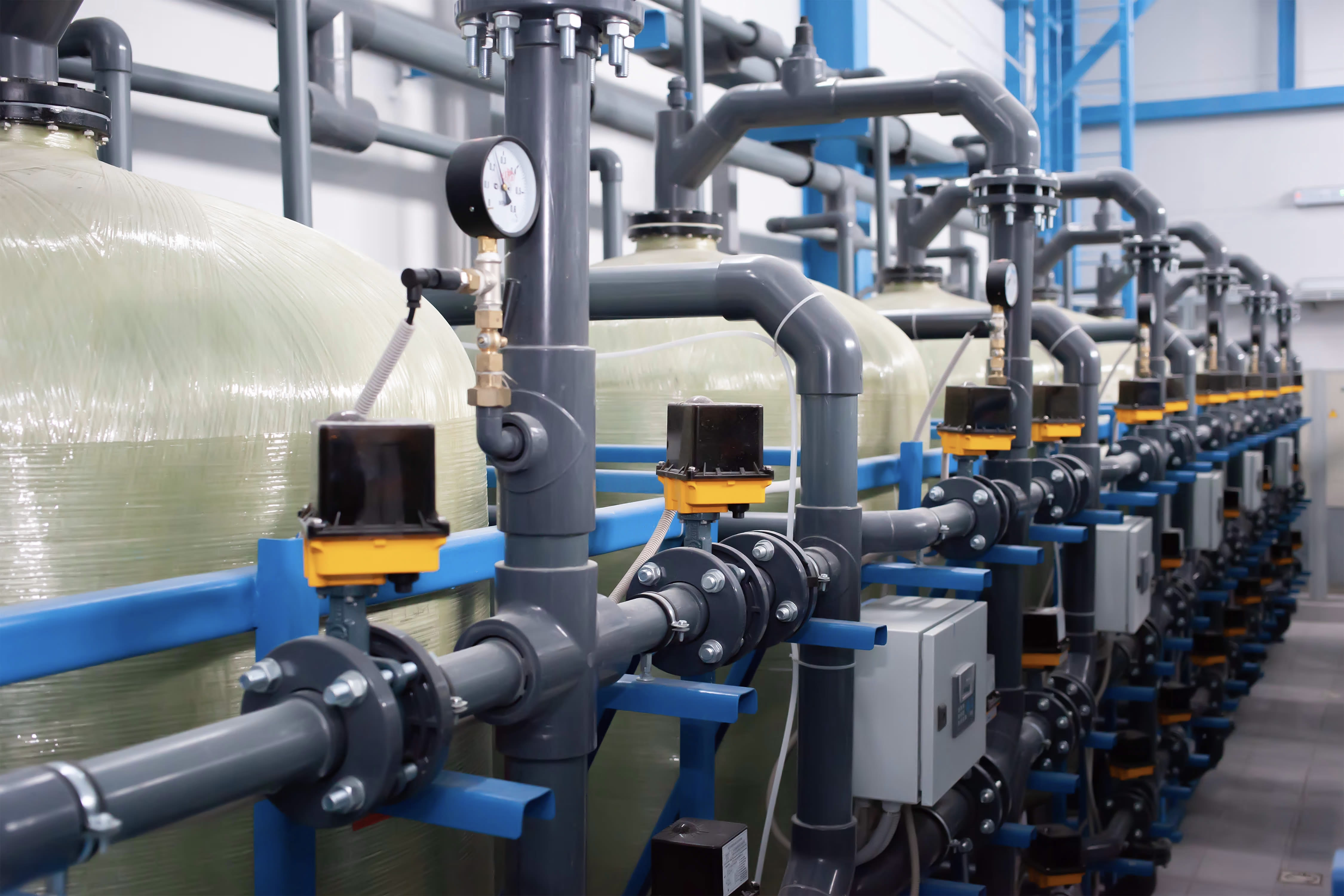
The water industry relies on equipment from multiple suppliers, each utilizing different communication protocols. This diversity creates a communication challenge where SCADA systems, PLCs, and monitoring devices may operate on incompatible standards such as Modbus, PROFINET, EthernetIP or PROFIBUS. Without proper protocol conversion capabilities, these systems cannot share critical operational data effectively.
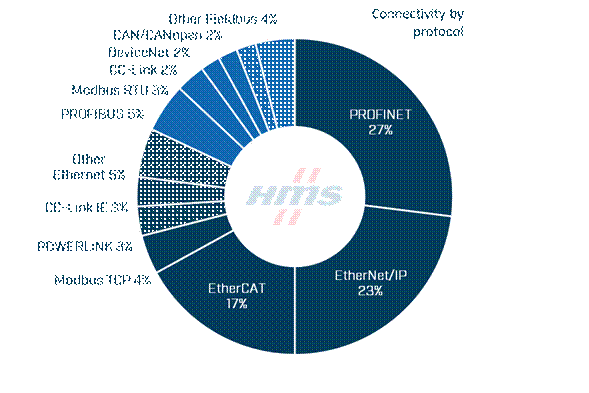
Many water utilities continue to rely on legacy systems that were designed decades ago, long before the concept of industrial connectivity emerged. These systems often lack the communication capabilities necessary for modern smart water implementations. However, replacing entire infrastructure systems is neither financially feasible nor operationally practical for most organizations.
In regions without access to electricity, devices must rely on battery power, which poses a significant limitation for communication systems. This dependency can restrict functionality and operational duration, making it a key challenge in maintaining reliable communication in such areas
Industrial connectivity refers to the capability of machinery and devices to link and communicate with each other and with external systems. This connectivity forms the foundation upon which all smart water initiatives must be built. Without proper connectivity, critical information may be inaccurate, delayed, difficult to access, or even non-existent.
Effective industrial connectivity addresses several critical limitations:
Industrial gateways represent a practical solution for organizations struggling to integrate legacy systems with modern smart water technologies. These devices serve as translation hubs, converting communication protocols and enabling data exchange between incompatible systems.
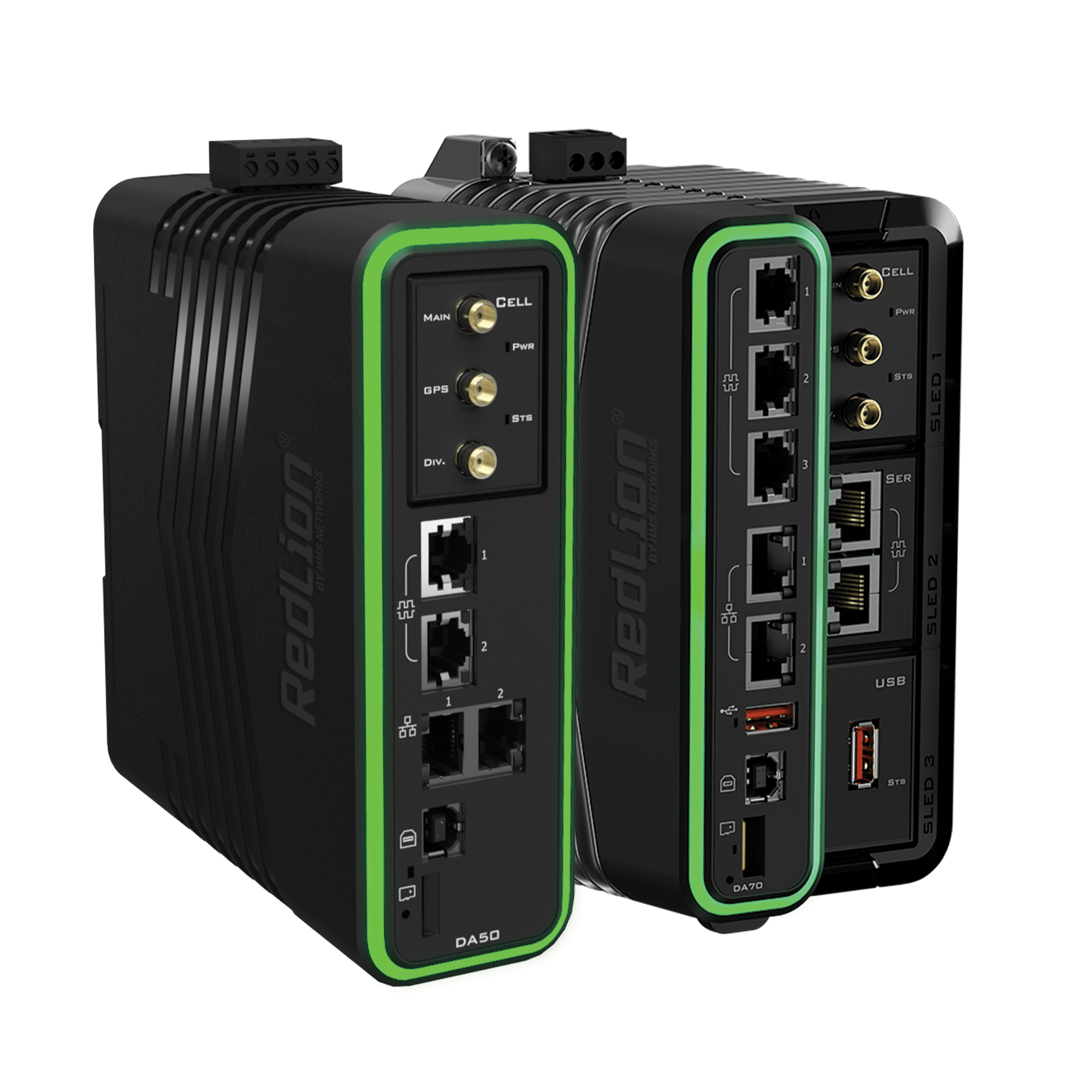
HMS Networks' industrial controllers exemplify how gateway technology can address integration challenges. These solutions provide protocol conversion capabilities that allow legacy PLCs, SCADA systems, and other operational technology to communicate with modern industrial networks and cloud platforms.
The key advantages of industrial gateways include:
The Purdue Model provides a framework for understanding industrial network architecture, with different levels requiring specific communication approaches in water treatment plants.
At the field device level, industrial gateways collect data from existing programmable logic controllers (PLCs) that control pumps, valves, and monitoring equipment. These PLCs may use various protocols such as Modbus RTU, PROFIBUS, or proprietary communication standards. Gateway devices translate this data into standardized formats for transmission to higher network levels.
The supervisory level requires integration with SCADA systems across wide area networks (WAN). This integration typically utilizes protocols like DNP3 and OPC UA to ensure reliable data transmission. A practical example of this integration can be seen in the case of Entwässerungsbetriebe Würzburg, which upgraded its remote monitoring infrastructure for 70 pumping stations. The utility successfully implemented 4G connectivity while maintaining compatibility with existing PLC S7 and ABB AC 500 controllers and WinCC SCADA systems.
Cloud platform integration for analytics presents a significant challenge for Water & Wastewater companies. At the enterprise level, this process involves merging operational data with cloud platforms to enable advanced analytics and business intelligence. Achieving this integration relies on protocols like MQTT and OPC UA, as well as dedicated connectors for leading platforms such as Microsoft Azure and Amazon AWS.
Veolia and Envirochemie demonstrate successful cloud connectivity implementations that improve operations, reduce maintenance costs, and enhance sustainability. Their collaborative approach to cloud-based water management showcases how proper integration can deliver measurable operational benefits.
Wireless communication technologies provide essential solutions for overcoming physical integration difficulties, particularly in distributed water systems where cable installation may be impractical or cost-prohibitive.
Fourth and fifth-generation cellular networks offer high-bandwidth, reliable connectivity for critical water infrastructure. These networks support real-time data transmission and remote monitoring capabilities essential for smart water operations. The transition from 3G to 4G networks, as demonstrated in the Würzburg case study, shows how utilities can maintain operational continuity while upgrading to more robust communication standards.
Narrowband Internet of Things (NB-IoT) technology provides excellent coverage for water meter reading and sensor monitoring applications. Its low power consumption and extended range make it ideal for distributed monitoring points where traditional connectivity options are limited.
Long Range Wide Area Network (LoRaWAN) technology offers cost-effective solutions for monitoring remote assets across large geographical areas. Water utilities can deploy LoRaWAN networks to monitor pumping stations, treatment facilities, and distribution points without requiring extensive infrastructure investments.
The combination of these wireless technologies with appropriate protocol converters and industrial gateways creates comprehensive connectivity solutions that address the integration challenges identified in the HMS Networks survey.
The challenges of integrating smart water projects are substantial, yet entirely achievable.. The HMS Networks survey findings underscore the critical importance of addressing industrial connectivity as the foundation for successful digital transformation initiatives.
Organizations that invest in robust protocol converters, industrial gateways, and wireless communication solutions position themselves to overcome the integration barriers that have hindered many smart water projects. By bridging the gap between legacy systems and modern industrial networks, these technologies enable water utilities to achieve the visibility and connectivity necessary for advanced analytics, predictive maintenance, and optimized operations.
The path to Water 4.0 begins with establishing reliable industrial connectivity. Utilities that recognize this fundamental requirement and implement appropriate solutions will be better positioned to realize the full potential of their smart water investments while maintaining operational continuity and maximizing existing infrastructure value.
For organizations seeking to address their integration challenges, consulting with industrial connectivity experts can provide valuable guidance on selecting and implementing the most appropriate solutions for their specific operational requirements and infrastructure constraints.