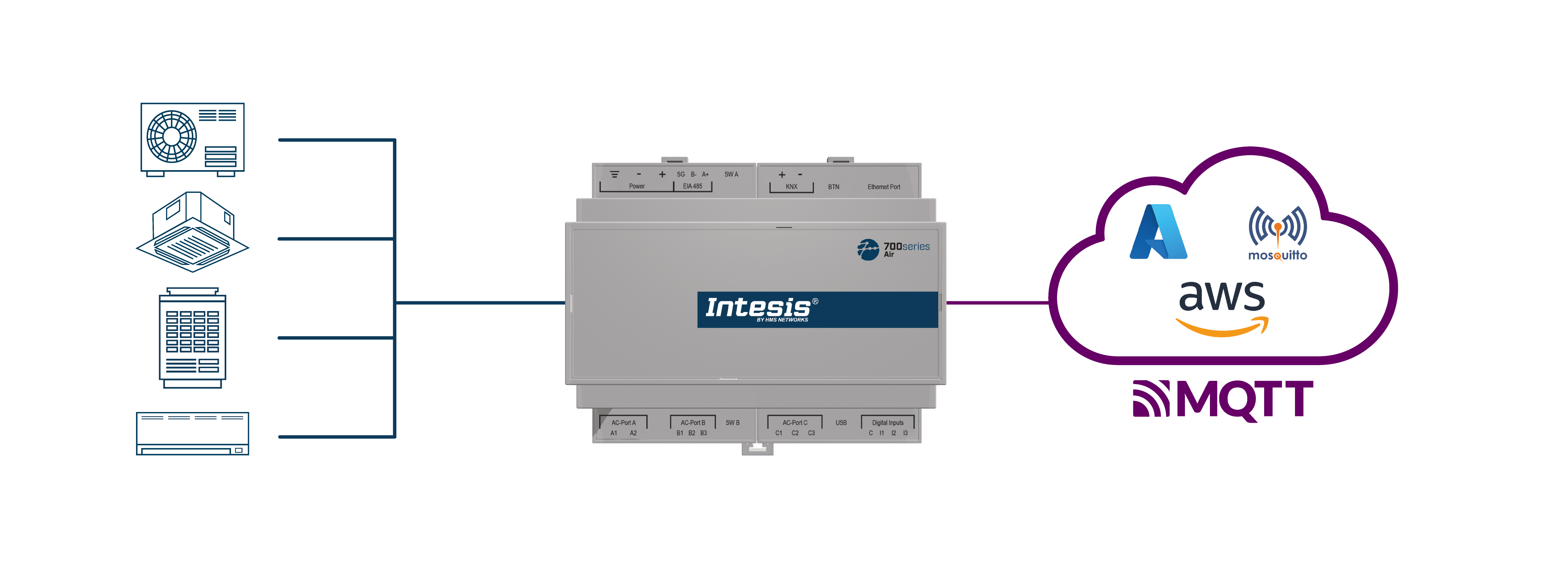
The Intesis 700 Series Air with MQTT addresses this requirement by enabling bidirectional communication between multi-indoor HVAC systems and MQTT brokers, supporting integration into cloud-based energy management systems, building management platforms, and OEM digital service ecosystems.
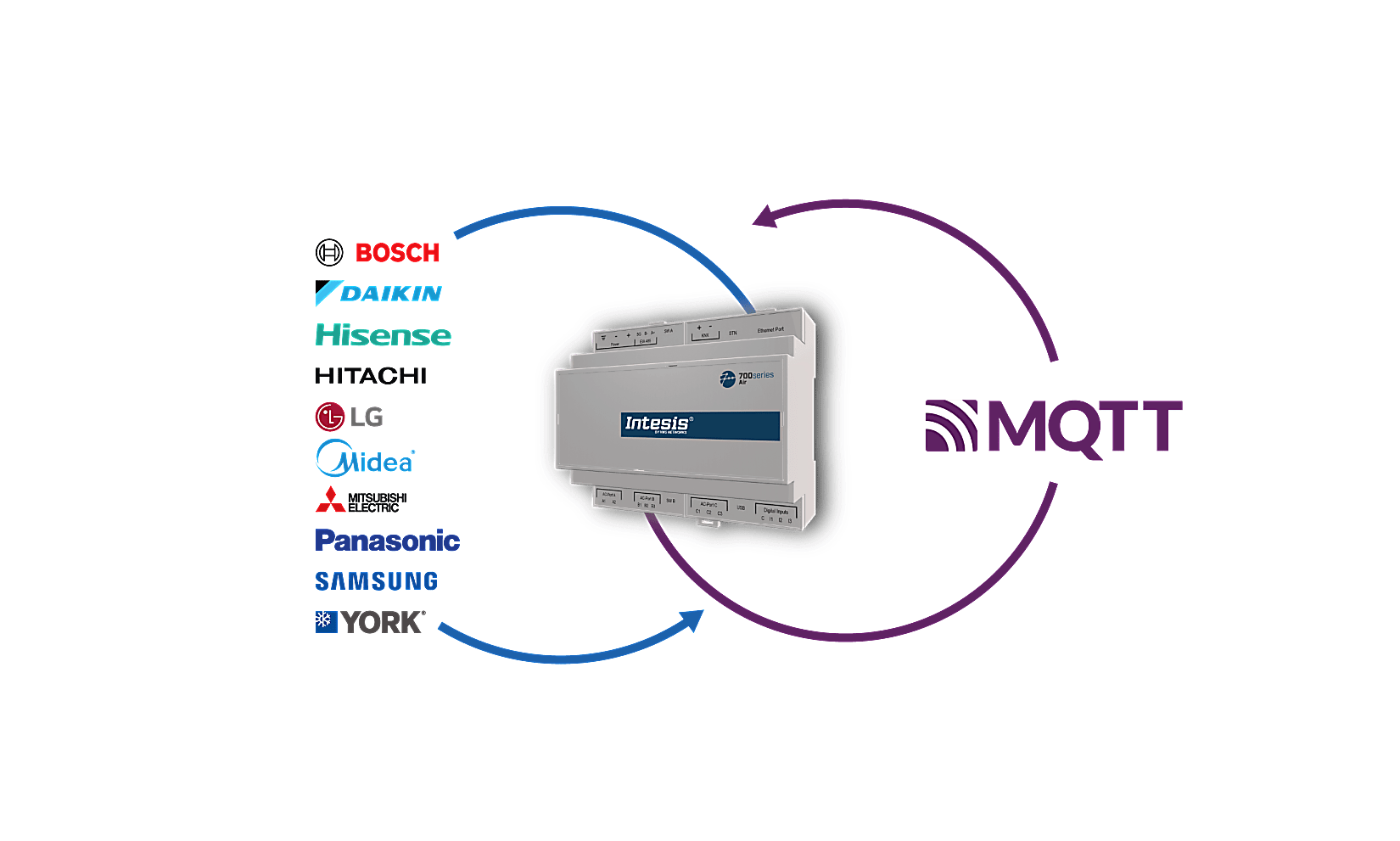
As HVAC installations increasingly require integration with cloud platforms for monitoring, analytics, and energy optimization, the market demands reliable and secure communication mechanisms that align with IoT architectures. MQTT has become the de facto protocol in these environments due to its lightweight structure, scalability, and compatibility with major cloud providers.
Building operators and HVAC manufacturers are under growing pressure to:
Remote management is currently done via MQTT in all energy management projects; only HVAC control was missing in the integration, systems responsible for more than 40% of the building’s total energy consumption. But the 700 Series Air gateways now respond to these requirements with a structured MQTT implementation aligned with industry practices.
The gateways support both MQTT over TCP (port 1883) and MQTT over TLS (port 8883), enabling encrypted communication using SSL/TLS certificates. Certificate management can be handled remotely, reducing on-site interventions and simplifying lifecycle maintenance.
To ensure reliability in operational environments, the implementation supports:
These mechanisms provide the reliability required in HVAC monitoring and control applications where system visibility must be maintained even in unstable network conditions.
The 700 Series Air gateways publish predefined topics with a unified variable structure, independently of the HVAC brand. This simplifies integration with cloud platforms and reduces custom mapping efforts. Only required signals can be enabled, limiting broker load and optimizing bandwidth consumption.
The gateway operates as both publisher and subscriber, transmitting operational parameters (such as mode, fan speed, temperature setpoints, and system status) and receiving control commands from cloud applications.
A bus scan function detects connected indoor units and available signals automatically, accelerating commissioning and reducing configuration errors.
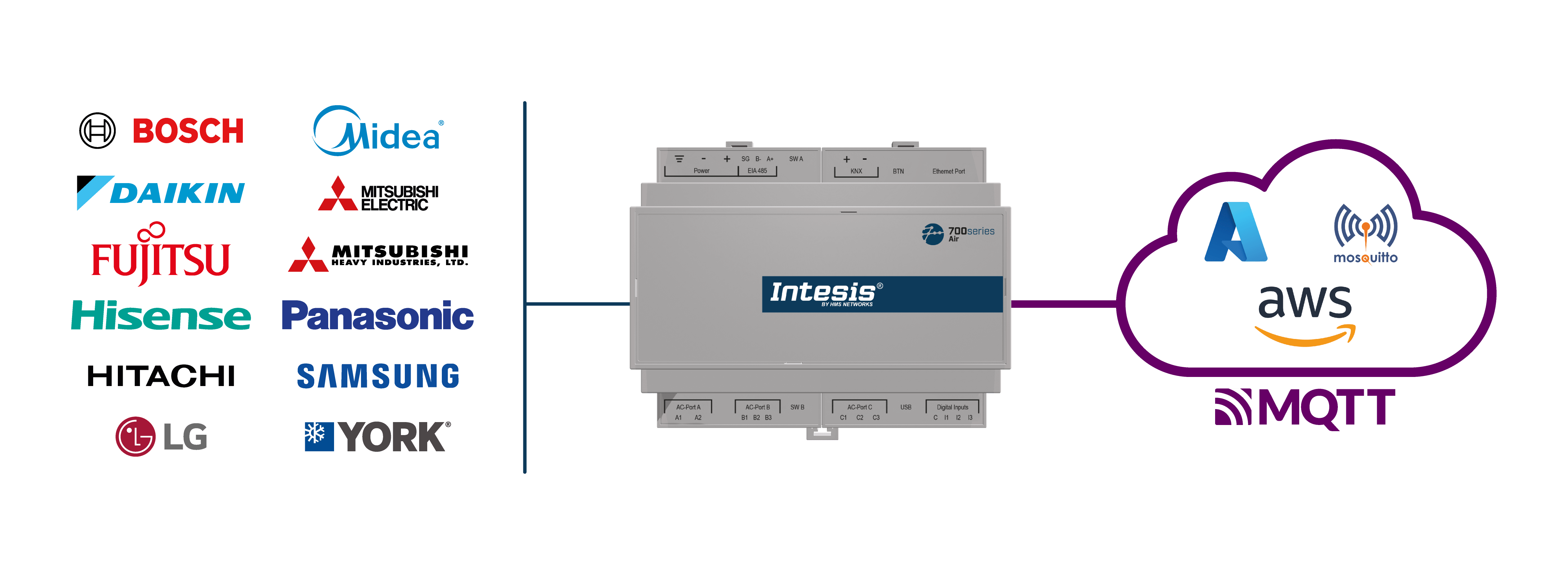
The 700 Series Air concept enables a single hardware platform to support multiple HVAC brands and models. This approach simplifies inventory management and reduces compatibility risks in projects involving different manufacturers or phased installations.
The product is compatible with leading MQTT brokers and cloud platforms, including implementations based on Microsoft Azure, Amazon Web Services, and standard Mosquitto brokers.
The introduction of MQTT into the 700 Series Air portfolio reflects the ongoing transition of HVAC systems from isolated control networks to cloud-connected infrastructures. By combining secure communication, structured data modeling, and multi-brand compatibility, Intesis provides a practical integration layer between indoor HVAC equipment and modern IoT architectures.
The 700 Series Air with MQTT is now available within the Intesis product portfolio.